
Abstract:
Background: Although subjective deterioration of scalp health (SDSH) with hijab use has already been reported in prior literature, factors affecting the decision to seek medical intervention in this cohort are understudied. Factors associated with seeking medical versus alternative treatment among hijab-wearing females are reported in this study.
Methods: Cross-sectional data were collected from adult hijab-observing women of Pakistan. Continuous variables were mentioned as median and (interquartile range), and categorical variables as frequency (percentage). Multivariable logistic regression was used to assess the factors associated with opting for professional versus alternative treatment. A two-tailed p-value < 0.05 was considered statistically significant.
Results: From a group of 512 hijab-observing women, 362 (70.7%) experienced SDSH, 262 (51.2%) undertook treatment, and only 62 (12.1%) opted for treatment by a healthcare provider. Participants seeking professional care had a significantly higher median (IQR) age [21 (2) years vs. 20 (2) years] and comorbid prevalence (46.8% vs. 26.5%) in comparison to those choosing alternative treatment. Significant differences in the health-seeking preferences of hijab users experiencing subjective deterioration of head lice (1.6% vs. 11.0%), oily scalp (40.3% vs. 25.0%), and painful scalp (22.6% vs. 12.0%) were also reported in terms of choosing professional versus other treatment options, respectively. The only factor significantly associated with seeking medical consultation over other treatment alternatives was the presence of comorbidity [OR = 2.44 (95% CI, 1.34-4.46), p = 0.004].
Conclusion: Our results show that most hijab-wearing women do not preferentially opt for treatment by a licensed medical practitioner. Barriers to healthcare-seeking behavior for scalp dermopathy in headscarf wearers need further exploration to ensure sustained provision of effective and culturally competent dermatologic care by primary care providers.
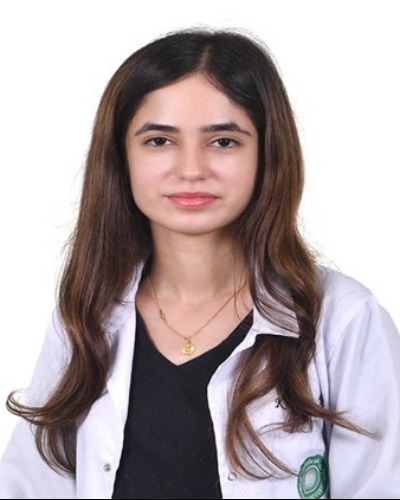
Biography:
Dr. Kinza Jawed graduated from medical school in January 2026 and is currently pursuing a Dean’s Clinical Research Fellowship at Aga Khan University, Pakistan. She is deeply passionate about public health research and medical education, with a strong interest in advancing evidence-based healthcare practices and academic mentorship. Throughout her academic career, she has actively participated in national medical conferences, where she has presented her research and received multiple awards for Best Oral Presentation. Dr. Jawed will be applying for residency training in the United States in the upcoming Match cycle, intending to integrate clinical excellence, research, and medical education into her future career.
Copyright 2024 Mathews International LLC All Rights Reserved
